Training Your Eye: Practical Exercises in Creative Observation
Training Your Eye: Practical Exercises in Creative Observation
Improving visual observation is a matter of structured looking. The eye learns through repeated focus on relationships: edges, values, proportions, and rhythms. The exercises below are intended to be short, clear, and repeatable so they can be incorporated into daily or weekly routines.
Value ladders and limited palettes
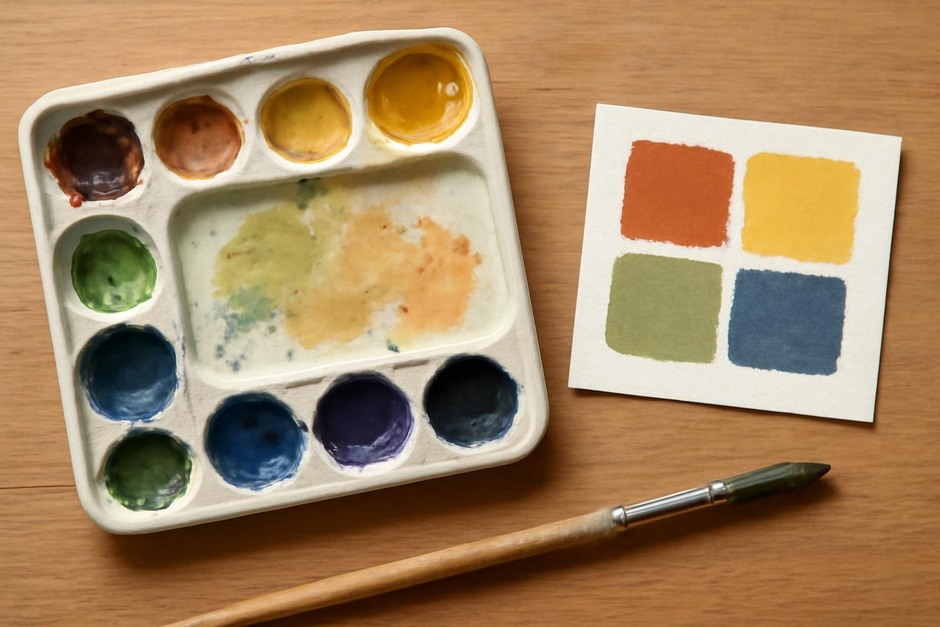
Begin with small studies that isolate one variable. A value ladder exercise helps you see relative lightness and darkness. Choose a reference and mix or select three to five tones. Paint or tone simple shapes and compare them directly to the reference, adjusting until the tones match. This trains your eye to distinguish subtle contrasts.
Similarly, work with a two- or three-colour palette. Limiting hue reduces decision fatigue and sharpens sensitivity to temperature and value shifts.
Contour and negative-space drawing
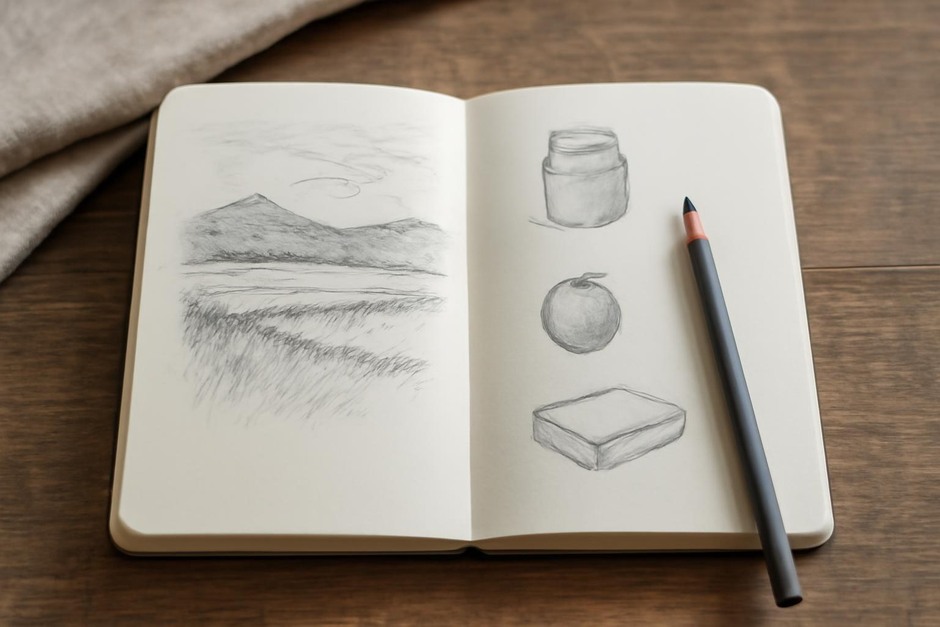
Blind contour and modified contour drawings improve hand-eye coordination and attentiveness to edges. For negative-space drawing, focus on the shapes around and between objects rather than the objects themselves. This switches attention from symbolic recognition to precise observation of form.
Thumbnail composition drills
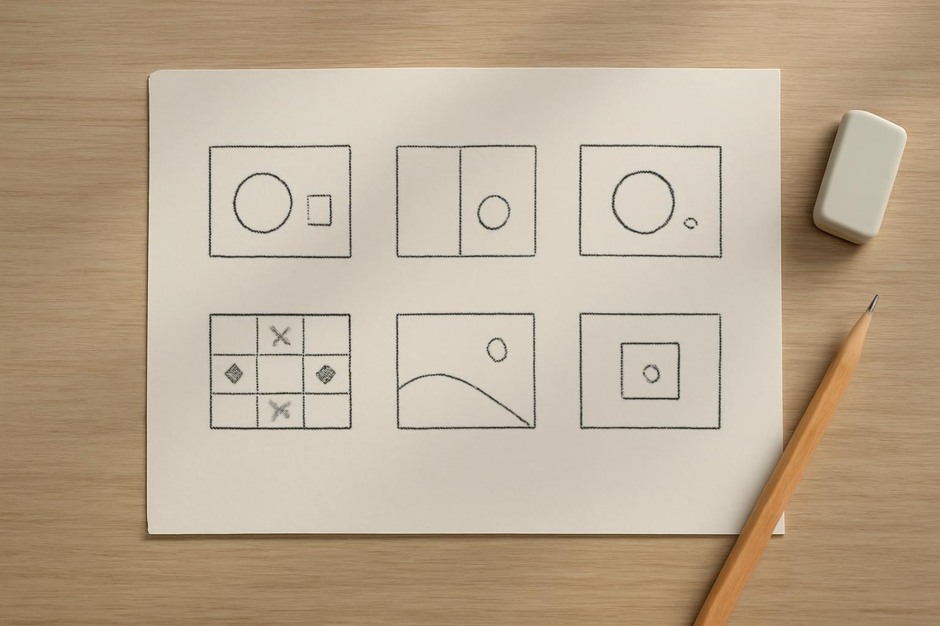
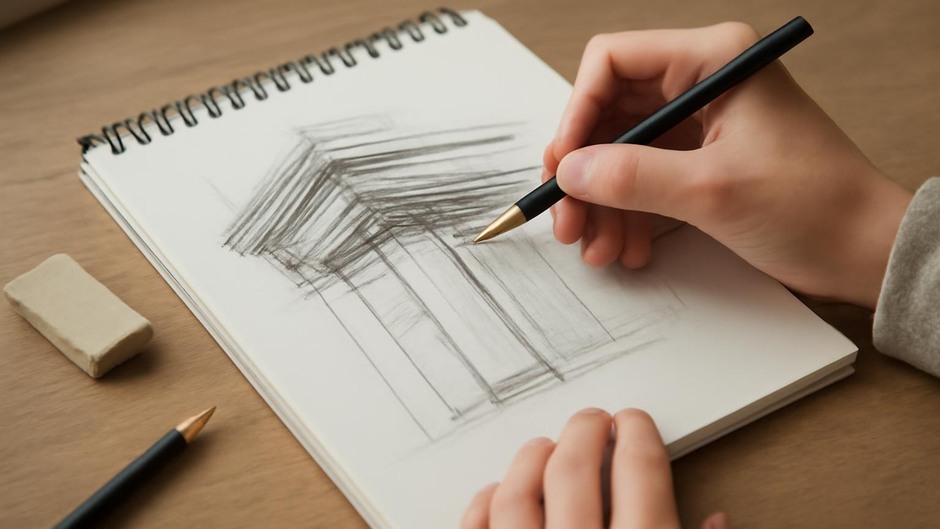
Thumbnails are quick compositional sketches that force you to make choices. Spend five to ten minutes creating a set of small, simplified compositions for a single subject. Concentrate on placement, balance, and focal points. Limit yourself to blocks of tone and a few lines. The speed encourages decisive thinking and helps identify compositional strengths.
Time-limited studies
Constrain time to sharpen concentration. Try one-minute, five-minute, and twenty-minute versions of the same subject. Short studies teach economy; longer studies reveal depth. Comparing them highlights how much information can be communicated with minimal marks and when more time reveals structure and subtlety.
Slow looking and description
Practice slow looking by describing a subject in words before drawing. Note textures, rhythms, and relationships: “the shadow begins at the leaf edge and narrows toward the stem,” or “the pavement tiles are wider near the foreground.” Verbal description forces precise observation and can guide subsequent mark-making.
Pattern hunting and composition awareness
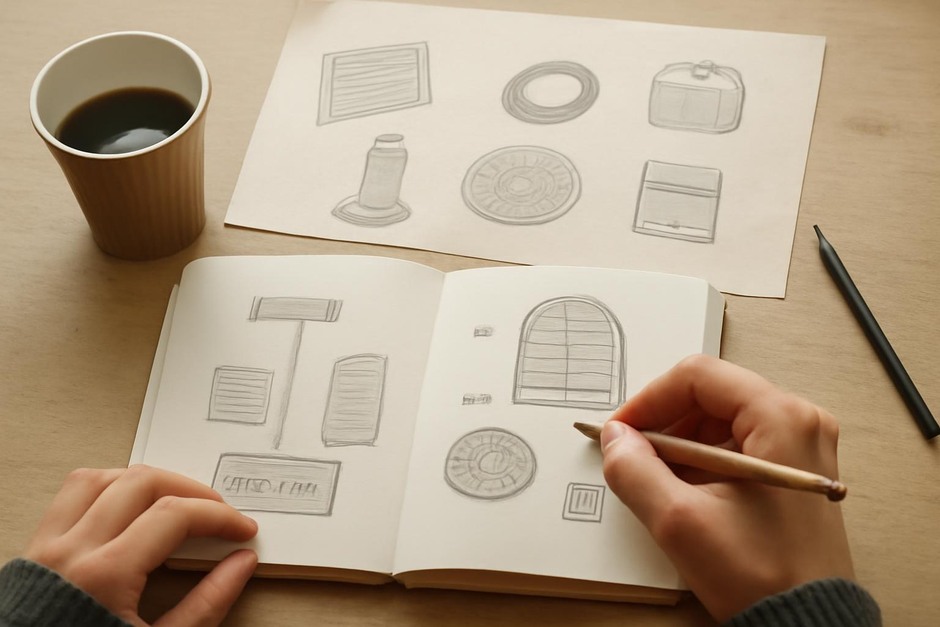
Walk a neighborhood or a public space with the intention of identifying repeating motifs: arcades, window rhythms, signage patterns, or pavement geometry. Make small studies that translate those patterns into compositional motifs. This trains you to read environments as visual systems and to extract useful elements for later work.
Consistent review
Record results and revisit them periodically. Review will reveal recurring perceptual challenges, such as difficulty judging foreshortening or subtle hue shifts. When patterns appear, design targeted drills to address them. The process of observation, practice, and review builds a feedback loop that refines seeing skills over time.
These exercises emphasize attention and decision-making rather than evaluation. The goal is to cultivate a reliable way of seeing: one that can be applied across media, subjects, and moments of practice. Regular, modest effort produces steady gains in visual perception and creative confidence.