Composition Essentials: Balance, Rhythm, and Focus
Composition Essentials: Balance, Rhythm, and Focus
Composition is the art of placing elements so they relate meaningfully. It involves choices about balance, rhythm, emphasis, and frame. These choices guide attention and shape how an image reads. The following overview presents practical ideas and short exercises to make compositional decisions more intentional.
Balance and visual weight
Balance is about distributing visual weight. Weight comes from tone, colour, size, and detail. A dark, saturated shape carries more weight than a pale, desaturated one. Balance need not be symmetrical; asymmetry can be dynamic. The goal is to create a stable relationship among parts where attention is neither lost nor confused.
Establishing a focal point
Decide where you want the viewer to look first. Emphasis can be created with contrast, isolation, or directional cues. High contrast, a break in pattern, or a strong edge will attract the eye. Once established, secondary areas should support the focal point rather than compete with it.
Rhythm and movement
Rhythm connects elements and guides the eye through the image. Repeating shapes, alternating light and dark areas, or a sequence of diagonals can produce a sense of movement. Use rhythm to create a visual path that leads the viewer from the focal point through supporting details.
Framing and cropping
Cropping is a compositional decision as important as what you include. Tight crops can intensify focus and surface detail; wider framing situates subjects within context. Experiment with slight shifts in cropping to see how relationships change. Often a small crop can solve a compositional tension without altering the subject.
Thumbnail exercises
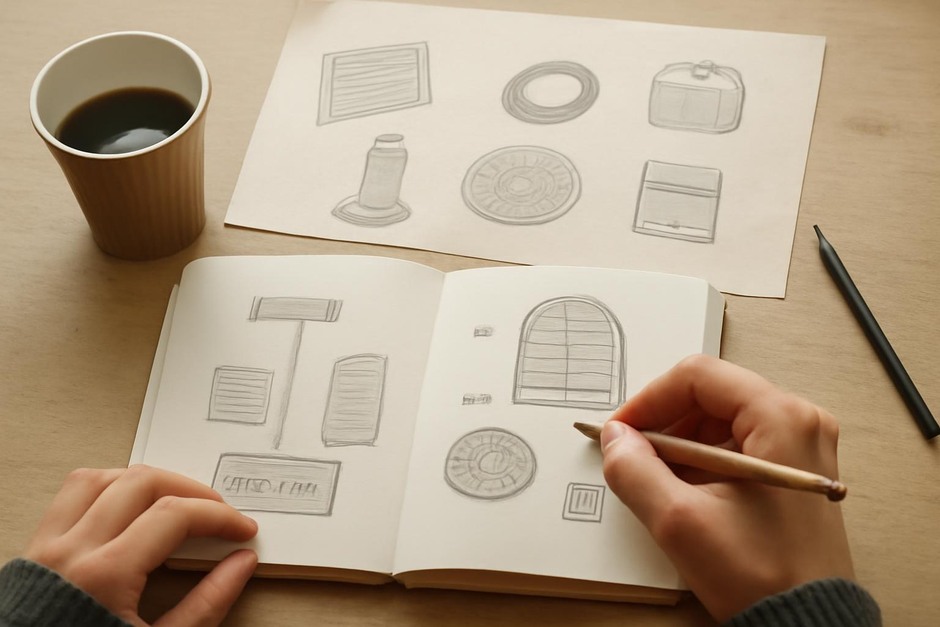
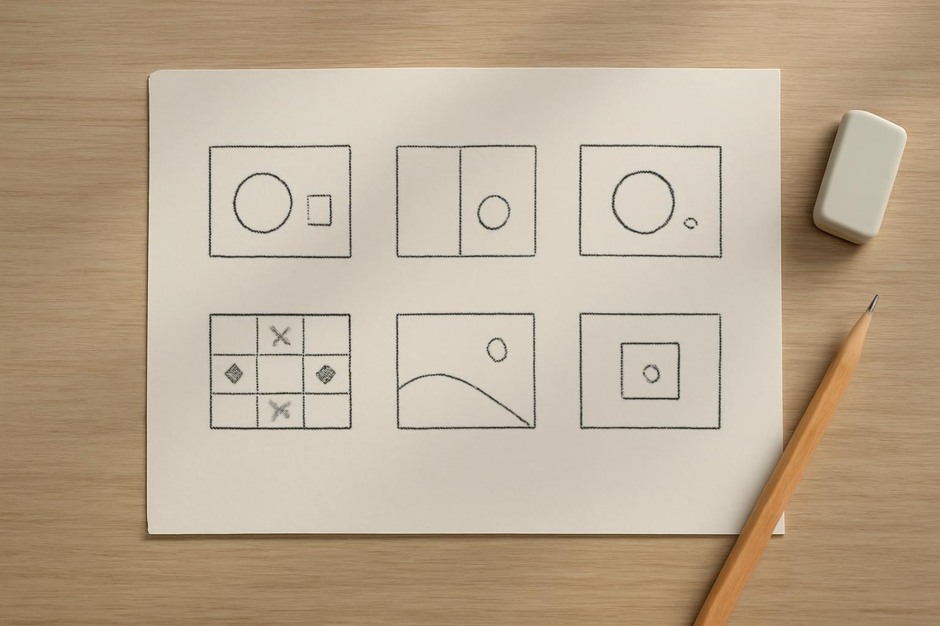
Create a series of small thumbnails for a single subject. Limit each thumbnail to simple shapes and tones. Try variations that move the focal point, change the balance, or alter the rhythm. Thumbnails are a low-cost way to test ideas and choose the most effective arrangement before committing to a final piece.
Use contrast wisely
Contrast—of tone, colour, or detail—helps organize an image. High contrast near a focal point increases emphasis. Conversely, lowering contrast in peripheral areas reduces distraction. Consider contrast as an organizational tool rather than an aesthetic rule: the right amount depends on your intent.
Simplify to clarify
Compositional clarity often comes from omission. Removing elements that do not support the main idea can strengthen the picture. Ask whether each shape contributes to balance, rhythm, or emphasis. If not, consider simplifying or repositioning it.
Iterate and step back
Compositional decisions benefit from iteration and distance. Step back physically or view your work reduced in size. A smaller view makes relationships clearer and highlights compositional issues. Rework the composition in thumbnails and small studies before committing large effort.
Composition is less about rules and more about purposeful choices. By practicing thumbnails, observing weight and rhythm, and testing crops, you develop a reliable sense of what arrangements best support your intent. Over time, these habits make composition an intuitive part of the creative process.